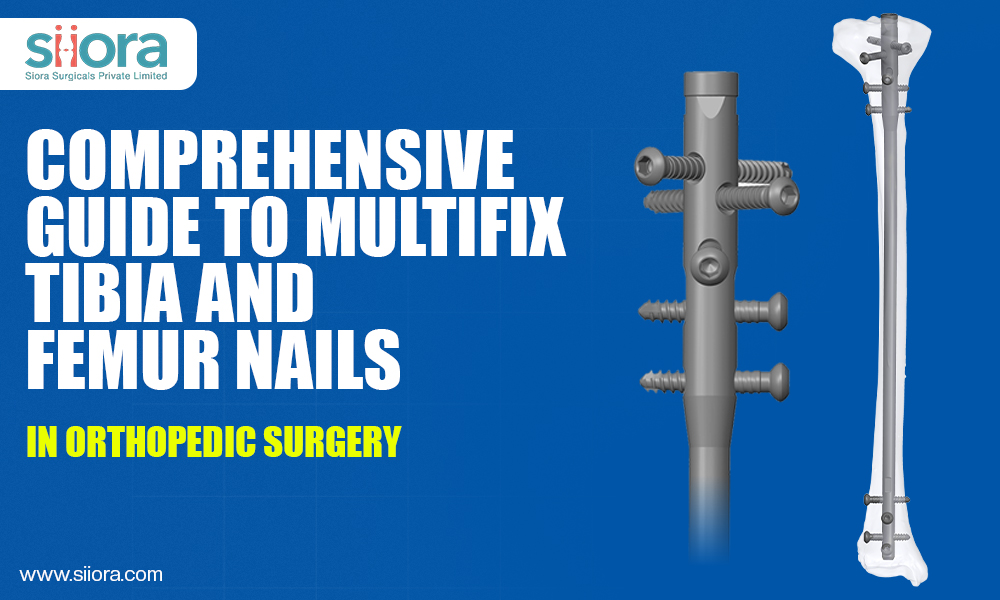
When a patient walks or sometimes limps into an emergency room with a tibial or femoral shaft fracture, one of the first challenges for orthopedic surgeons is deciding on the most reliable fixation method. Over the years, implants have gone through a journey of constant upgrades, starting from plates and screws to intramedullary nailing systems that work with the bone’s natural mechanics. Among these, multifix tibia nail and femur nails have gained recognition for offering both versatility and stability in complex fracture management.
What Are Multifix Nails?
In simple terms, multifix nails are intramedullary implants designed for long bone fractures, in this case, the tibia and femur. Unlike traditional rigid nails, which had limited locking options, multifix nails provide multiple configurations for locking screws. This design flexibility allows surgeons to adapt the fixation to fracture type, bone condition, and patient needs.
Think of them as a toolkit built into a single implant. Whether the fracture is simple, comminuted (broken into several pieces), or located closer to a joint, the locking options make it easier to create a stable construct tailored to that case.
Why Multifix Nails Matter in Tibia and Femur Fractures?
Both tibial and femoral fractures can be difficult to manage. The femur is the body’s largest bone and bears immense loads, while the tibia (the shin bone) is often vulnerable to open fractures due to its subcutaneous position. Poor fixation in either bone can translate to delayed healing, malalignment, or even the need for revision surgery.
Multifix nails address some of these concerns by:
- Providing angular stability: Multiple locking holes positioned in different planes allow screws to form a rigid, interlocking structure that resists both rotation and axial loading.
- Adapting to fracture patterns: Whether it’s a midshaft injury or one closer to the metaphysis (near the ends of the bone), the nail can be locked in more than one configuration to suit the need.
- Facilitating early mobilization: Stable fixation means patients can often start weight-bearing earlier, which is especially important in preventing complications from prolonged immobility.
The Biomechanical Edge
What really sets multifix systems apart is their biomechanics. Traditional nails sometimes left too much play, leading to secondary displacement. With multiple locking options—distal, proximal, and sometimes even oblique—the nail provides a much stronger grip within the canal.
For instance, in the femur, where rotational forces during walking are significant, having additional screw pathways ensures that the bone fragments remain stable. Similarly, in the tibia—where fractures are notorious for delayed union—this added stability promotes better bone healing.
Surgical Experience: Why Surgeons Prefer Them?
From the surgeon’s point of view, multifix nails bring a level of confidence during tricky cases. The instrumentation sets that come with them are designed for precision and adaptability. Flexible targeting devices make it easier to line up locking screws, even in challenging fracture locations.
Another practical benefit is reduced operative risk. Since the nails are designed with multiple options, surgeons have a kind of “backup plan” during surgery. If one locking screw doesn’t align perfectly, there are other angles to choose from without compromising the operation.
Patient Outcomes in Focus
It’s one thing for an implant to look good on paper, but what really counts is recovery. Patients treated with multifix tibia and femur nails often see:
- Reduced rates of non-union due to enhanced stability.
- Lower chances of malalignment, thanks to precise interlocking.
- Earlier return to mobility, which is critical after major lower-limb fractures.
For patients, this can make the difference between needing assistive support for months and regaining independence sooner. For surgeons, it means fewer follow-ups for implant failures or re-operations.
Final Thoughts
Managing tibia and femur fractures is about more than just holding bones together, it’s about restoring function, preventing complications, and getting patients back on their feet. Multifix nails make that task easier by giving surgeons flexibility and biomechanical confidence in a single implant system. For patients, it translates into quicker recoveries, fewer complications, and a smoother journey back to mobility.Learn about the advancements in healthcare sector and explore cutting-edge products, including trauma implants at WHX Dubai 2026.
 Global Orthopedic Conferences 2024
Leave a comment