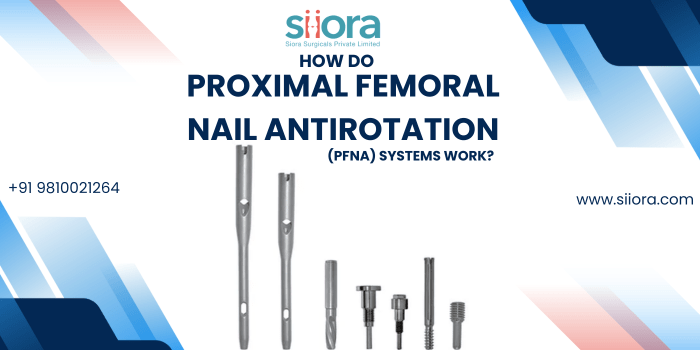
In the realm of orthopedic medicine, managing fractures of the proximal femur (upper part of the thigh bone) has always been a challenging task. The introduction of PFNA interlocking nail system has revolutionized the way these injuries are treated. This system provides a robust, minimally invasive solution for stabilizing and facilitating the healing of such fractures. This article delves into the mechanisms behind PFNA systems, their components, and their advantages in clinical practice.
Understanding the Proximal Femoral Nail Antirotation System
The PFNA system is a specialized intramedullary nail designed to provide stability for fractures of the proximal femur. These injuries are common in elderly individuals due to osteoporosis and can occur in younger people due to high-energy trauma such as car accidents or falls from significant heights.
PFNA systems are engineered to address fractures such as intertrochanteric fractures, subtrochanteric fractures, and other complex femoral fractures. The primary objective of this system is to provide rigid stabilization and prevent complications like malunion, rotational instability, or implant failure.
What Are the Components of the PFNA System?
Intramedullary Nail
The main body of this system is PFNA intramedullary interlocking nail that is inserted into the medullary canal of the femur. This nail acts as a scaffold, bearing the weight transferred through the hip joint and minimizing stress on the fractured bone.
Helical Blade or Screw
A unique feature of the PFNA system is the helical blade or locking screw, which is inserted into the femoral head. This blade enhances stability by compressing the cancellous bone in the femoral head, preventing rotational and axial movement.
Locking Mechanisms
The proximal and distal locking bolts secure the nail within the bone, ensuring proper alignment and preventing displacement during the healing process. These locking bolts can be adjusted to provide either static or dynamic fixation, depending on the fracture type.
Instrumentation
The PFNA system is complemented by a set of surgical instruments designed for precise placement, alignment, and fixation of the implant. These tools include reamers, targeting devices, and drill guides, all of which facilitate minimally invasive surgery.
How the PFNA System Works?
Pre-Surgical Planning
Prior to surgery, detailed imaging, such as X-rays or CT scans, is conducted to assess the fracture pattern and plan the procedure. It is also important to get an accurate measurement of the femoral canal along with an appropriate nail size.
Intramedullary Nail Insertion
The procedure begins with a small incision at the proximal end of the femur. A guidewire is inserted into the medullary canal under fluoroscopic guidance, followed by reaming to prepare the canal for the nail. The intramedullary nail is then inserted, ensuring proper alignment with the femoral axis.
Helical Blade Placement
A guide is utilized to drill into the femoral head through the nail’s proximal end. The helical blade or screw is then inserted, which compresses the cancellous bone to create a firm grip. This design prevents rotation and ensures optimal load distribution.
Locking and Fixation
Once the nail and blade are in position, locking bolts are inserted at both the proximal and distal ends of the nail. These bolts secure the nail and prevent any movement that could jeopardize the fracture alignment.
Post-Operative Stability
The PFNA system works by stabilizing the fracture site and allowing for controlled axial micromotion, which promotes bone healing. The helical blade design also reduces stress concentration, minimizing the risk of implant failure.
What Are the Advantages of PFNA Nailing Systems?
Minimally Invasive
PFNA systems require smaller incisions, reducing blood loss, surgical trauma, and post-operative pain.
Enhanced Stability
The helical blade effectively prevents rotational and axial movement, promoting better outcomes.
Faster Recovery
Patients can bear weight earlier, enabling quicker rehabilitation and reduced hospital stays.
Versatility
PFNA systems are suitable for a wide range of proximal femoral fractures.
Conclusion
Proximal Femoral Nail Antirotation (PFNA) systems have set a new standard in the treatment of proximal femoral fractures. Their innovative design, featuring a helical blade and locking mechanisms, provides unparalleled stability and promotes natural bone healing. By understanding how PFNA systems work, surgeons can better leverage their benefits, ensuring optimal outcomes for patients with femoral fractures. As technology continues to advance, the PFNA system remains a cornerstone of modern orthopedic surgery, offering hope and mobility to countless individuals worldwide.If you are looking for an international standard collection of trauma implants and instruments including PFNA nailing system, contact Siora Surgicals Pvt. Ltd., a renowned orthopedic manufacturer in India. The company is also looking for a reliable distributor of orthopedic implants in Belarus to expand its international market presence.
 Global Orthopedic Conferences 2024